Lessons Learned from the Land
When I rev up my old Stihl electric weed eater, it makes the sound of an old friend. I’ve strapped it over my shoulders for countless miles throughout the years, and by now it's comfortable, worn and dependable. In fact, my family likes to tease that it's my second child. Although I appreciate it immensely for the work it does and the beauty it helps create, of course my beautiful daughter is my one and only :)
As I walk the field using that faithful machine, I'm much more than cutting grass. It requires focus and attention.
The land is always communicating if I make the effort to listen. It tells me where life is thriving, where it is struggling, and even what it needs next. During this exercise, I think less about individual plants and more about the health of the entire ecosystem. The six principles of healthy soil have become my guide:
Keep the soil covered.
Minimize disturbance.
Encourage biodiversity.
Practice no-till whenever possible.
Welcome animal inputs.
Know your context.
These principles are straight forward but nuanced in practice. They require observation, patience, and willingness to accept that there isn't a single right answer on any farm.
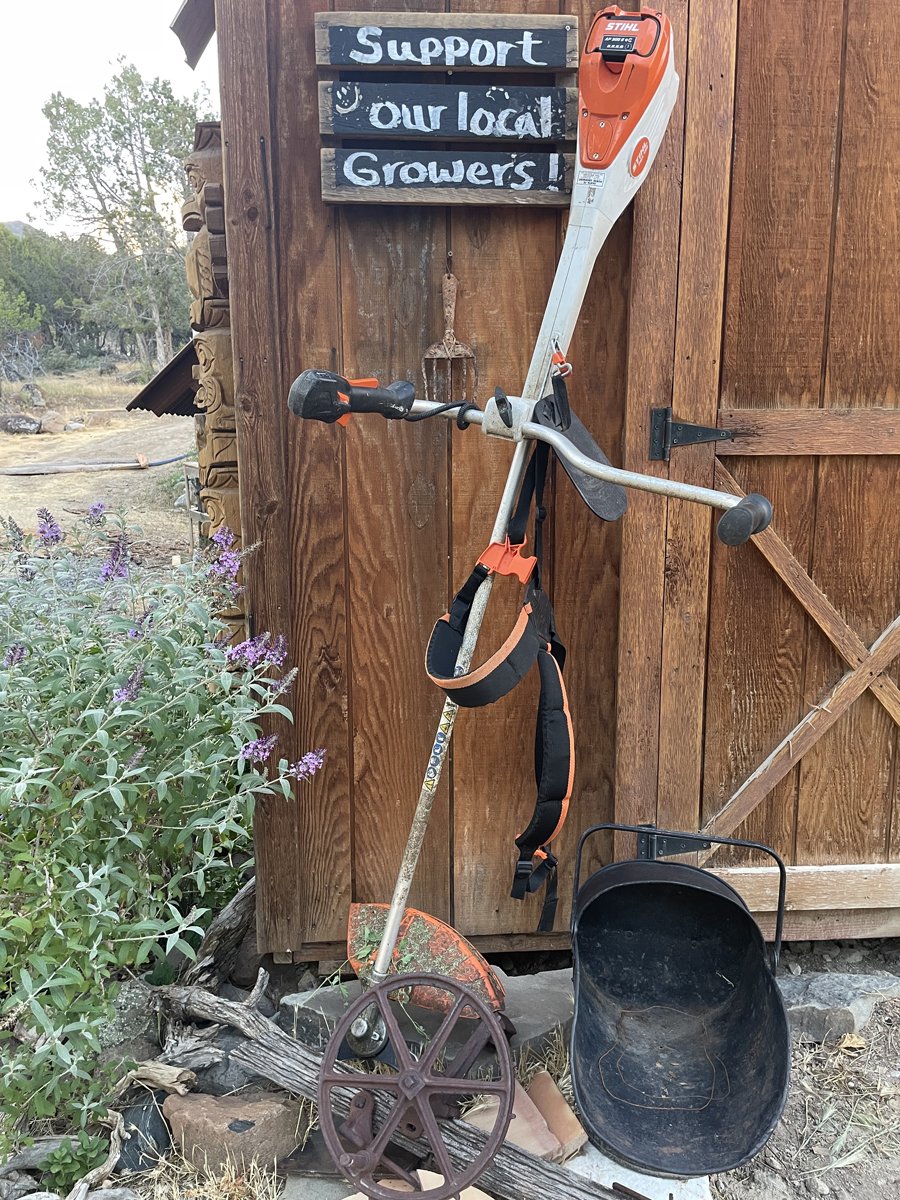
My weed eater allows me to practice what we call "chop and drop." As I cut grasses and lay them onto the soil, I'm keeping the ground covered instead of exposing it to the hot summer sun. That blanket of organic matter helps feed the teaming life beneath my feet while protecting the soil from drying out.
This year, I planted cover crops with several purposes in mind. I wanted to build healthier soil, but I also hoped to provide forage that would attract deer and turkeys, inviting wildlife to become part of the ecosystem. Between the volunteer grasses and alfalfa, buckwheat, peas, amaranth, and other grains are popping up. Each plant variety contributes something different. Unified, they create the diversity I'm hoping to encourage.
The alfalfa as a nitrogen-fixing plant, partners with soil microbes to capture nitrogen from the atmosphere and make it available within the soil. It's generous, and ambitious. Left entirely on its own, it tends toward domination of the field. By trimming it back in places, I give neighboring plants the opportunity to flourish also, preserving the biodiversity that is one of our guiding principles.
Every pass with the weed eater requires me to make a decision.
Am I helping the land or interfering with it? Am I cutting too much? Not enough?
Uncertainty creeps in.
"What if I'm not doing the right thing?"
When that thought breaks my reverie, I return to the principles. They coach me. They encourage observation and I protect the plants that support the principles.
The more I work the land, the more I recognize I am growing an ongoing relationship. My stewardship is shaped not just by science and observation but also by creativity, intuition, and, over time, I’m forging a deep love for this place.
I've visited many regenerative farms over the years, and no two are the same. Each reflects the unique relationship between the farmer and the land they care for. I always leave inspired by the different ways people interpret the same principles. There is no single picture of what regenerative agriculture should look like because every landscape has its own history, challenges and blessings.
This isn't an exercise in perfection. It's an opportunity to learn by making occasional mistakes. The world beneath our feet is astonishingly mysterious. The soil is alive with relationships we are only beginning to comprehend.
This work continues to fill me with hope. Every day offers another opportunity to observe more closely, to listen more carefully, and respond with greater wisdom. The six principles give us a compass. The land itself is, by far, the greatest teacher.